Five user roles, one product — designing Muallemi from the ground up.
Muallemi is a tutoring platform for students in Qatar — Grades 2 through 12, across math, science, Arabic, and English.
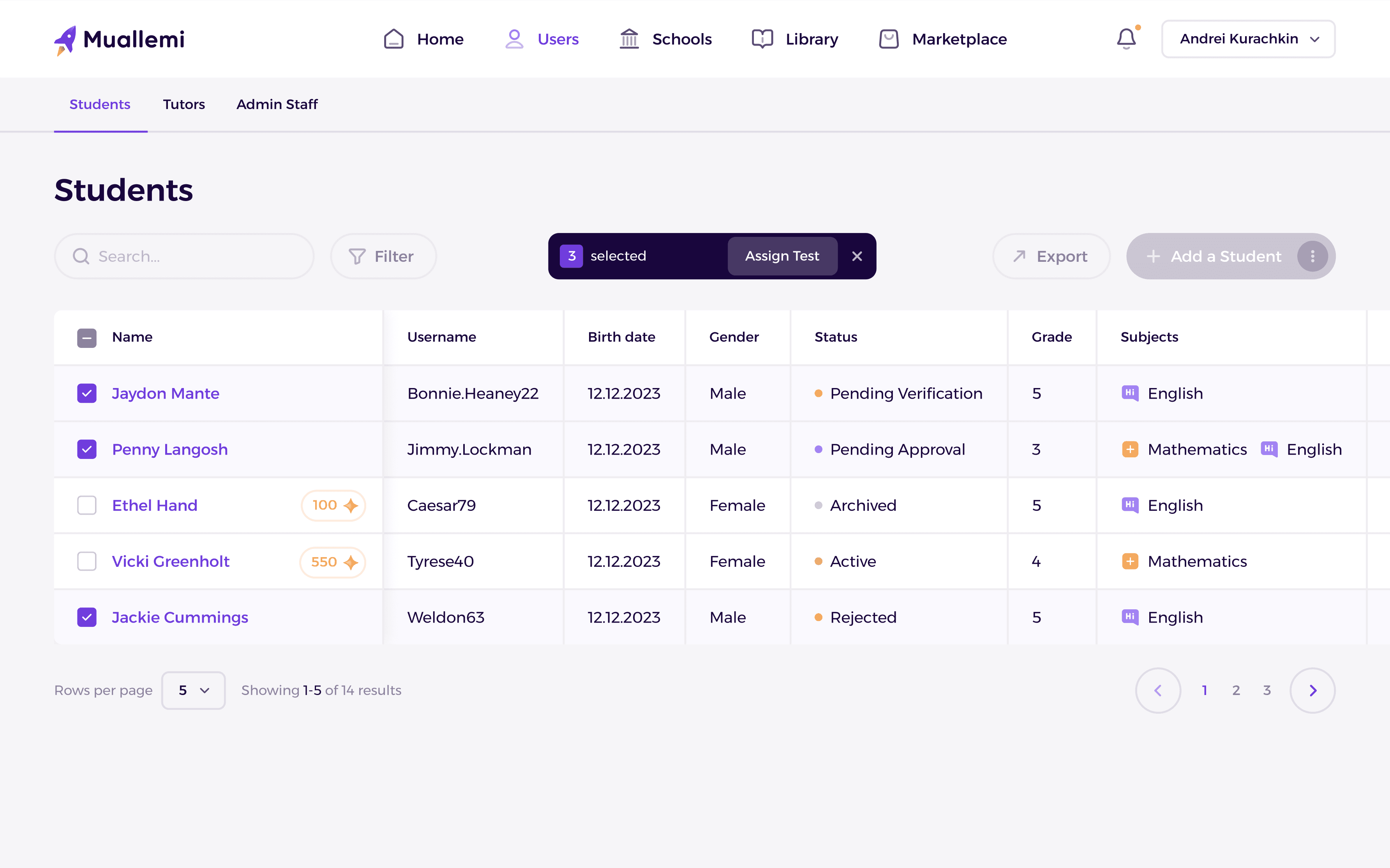
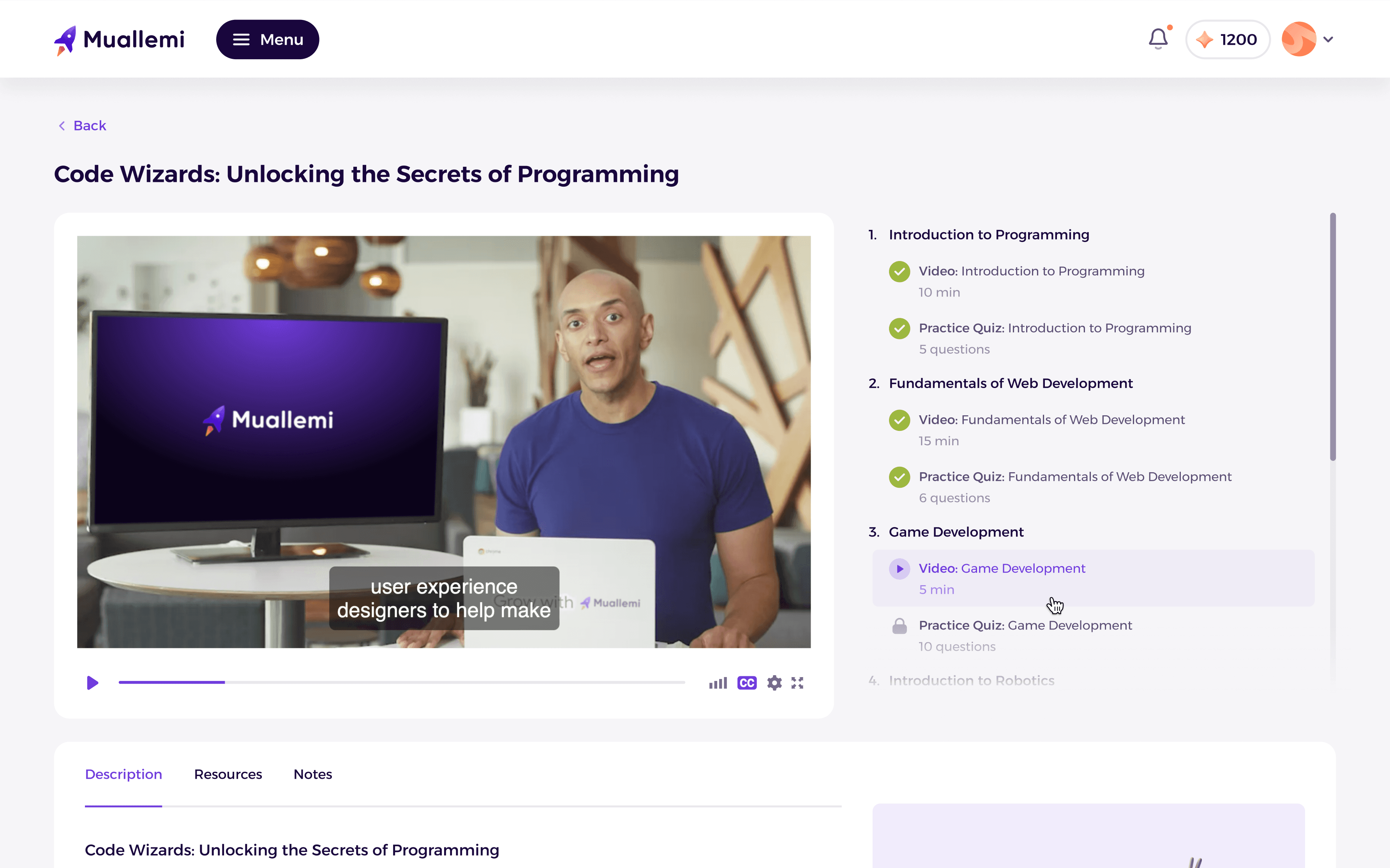
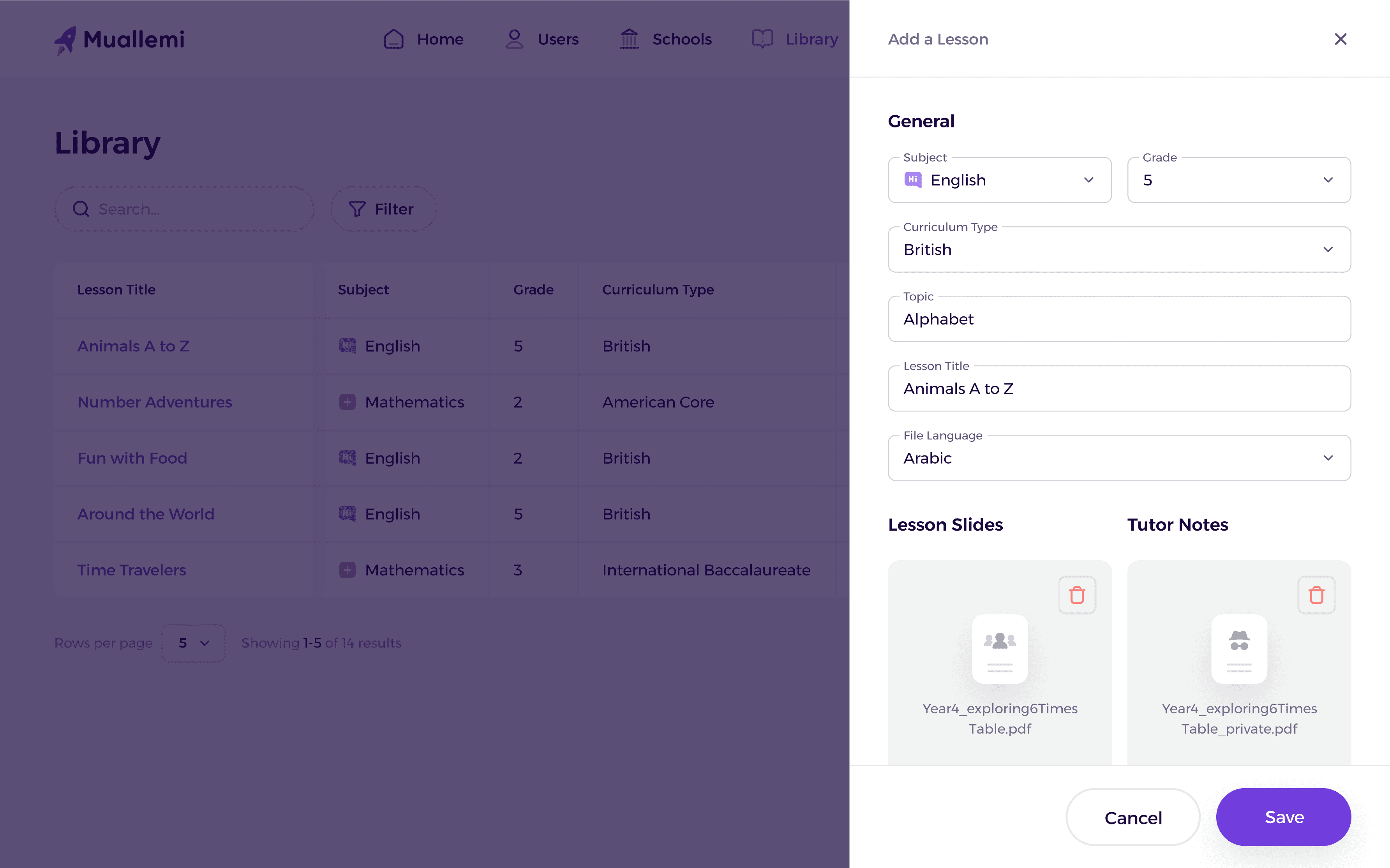
I designed the product over about a year, building the visual language and design system alongside it. Five user types, each with their own flows and logic: students, tutors, parents, school administrators, and institutional clients running the platform for entire classrooms.
My Role
Product Designer
Timeline
2023–2024 (1 yr 1 mo)
Team
PMs, engineers
Responsibilities
UI design, UX across 5 user roles, Illustration & iconography
Result
+12% avg. score improvement
93% of sessions rated 5/5
The challenge
Muallemi needed to serve five different types of users — each with different goals, different levels of technical confidence, and different contexts of use. A Grade 3 student and a school administrator are not the same person. Neither are a tutor mid-session and a parent reviewing their child's progress.
The challenge wasn't managing complexity — it was maintaining coherence. Every role needed its own logic while still feeling like one product.
Live session
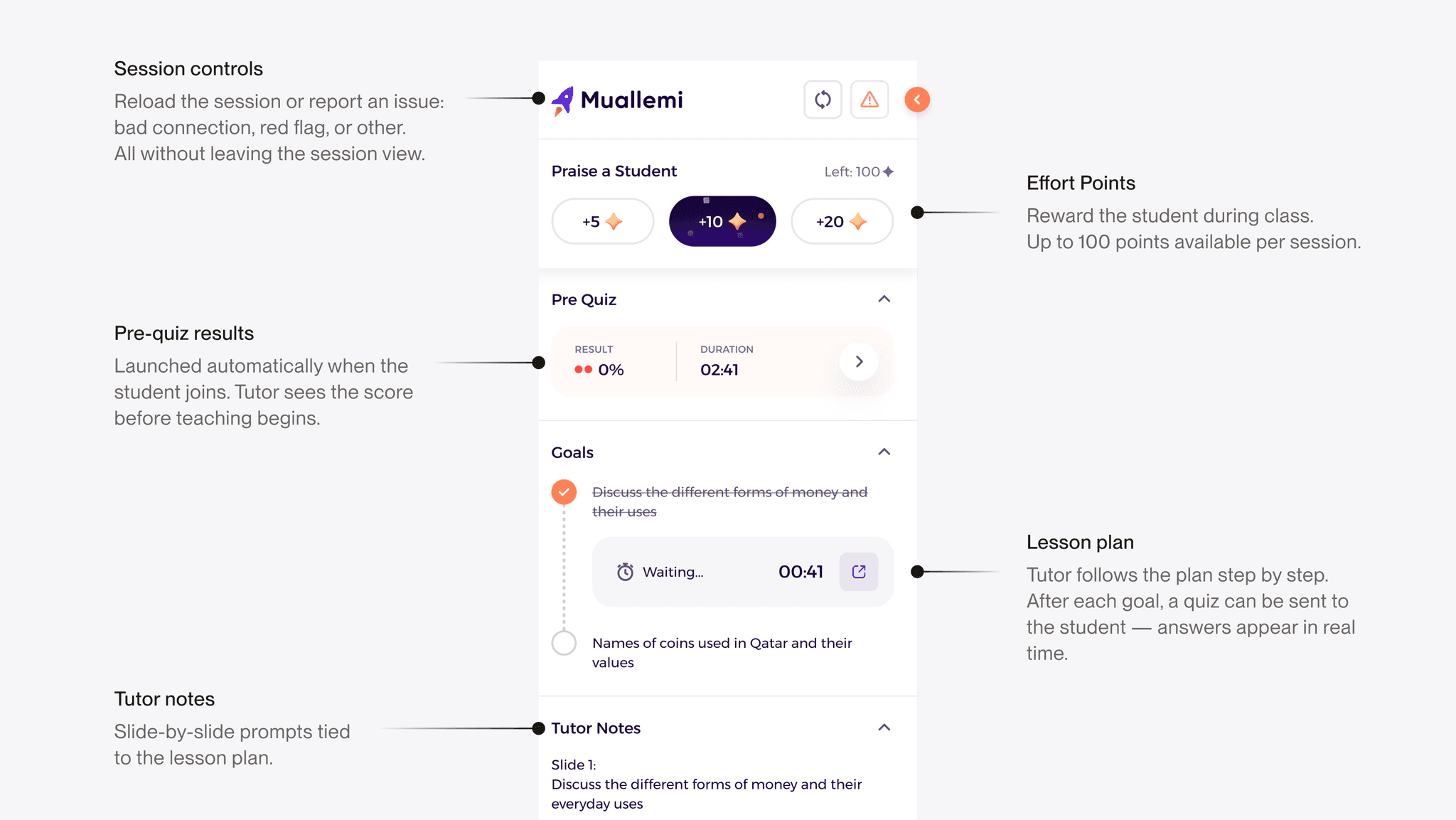
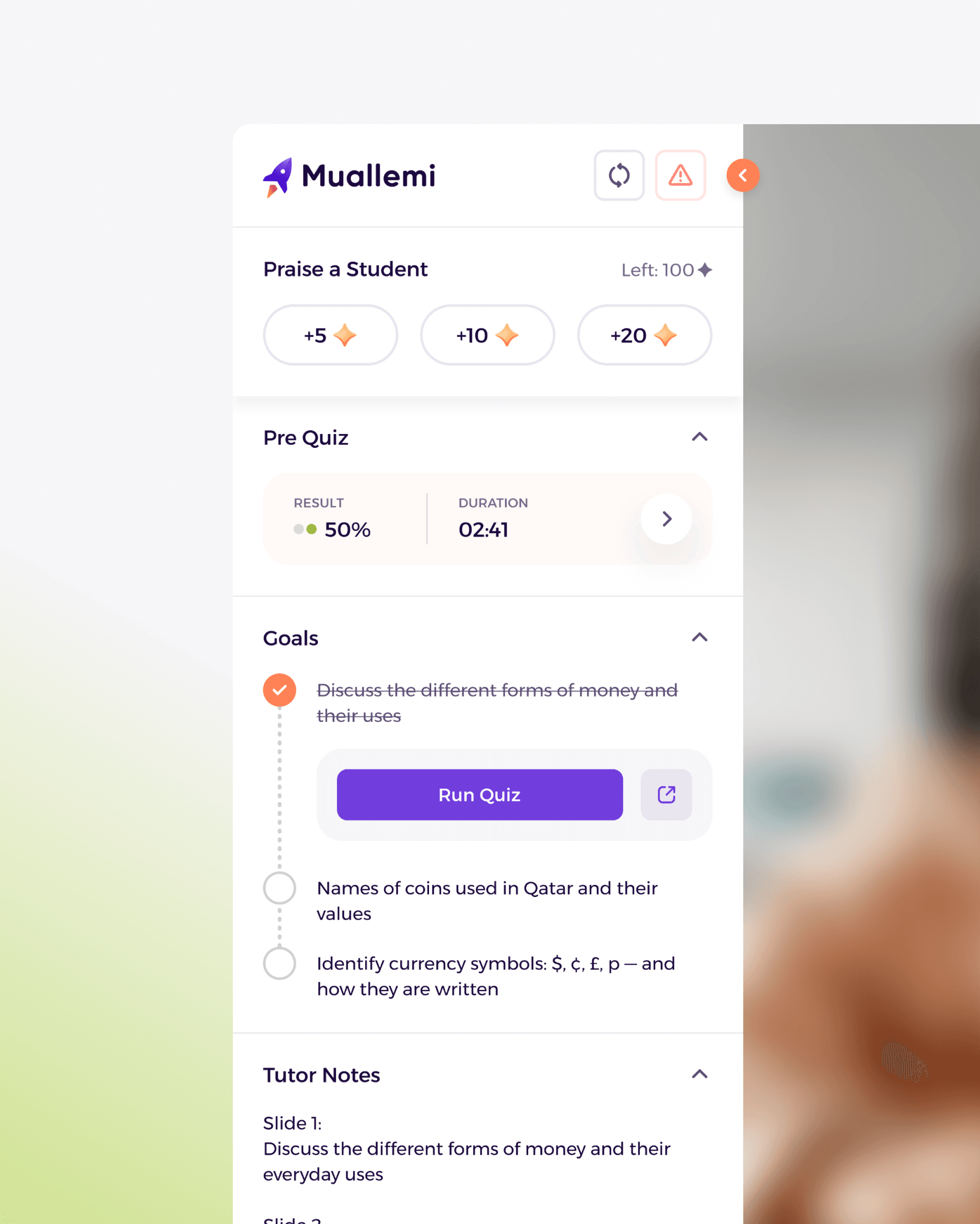
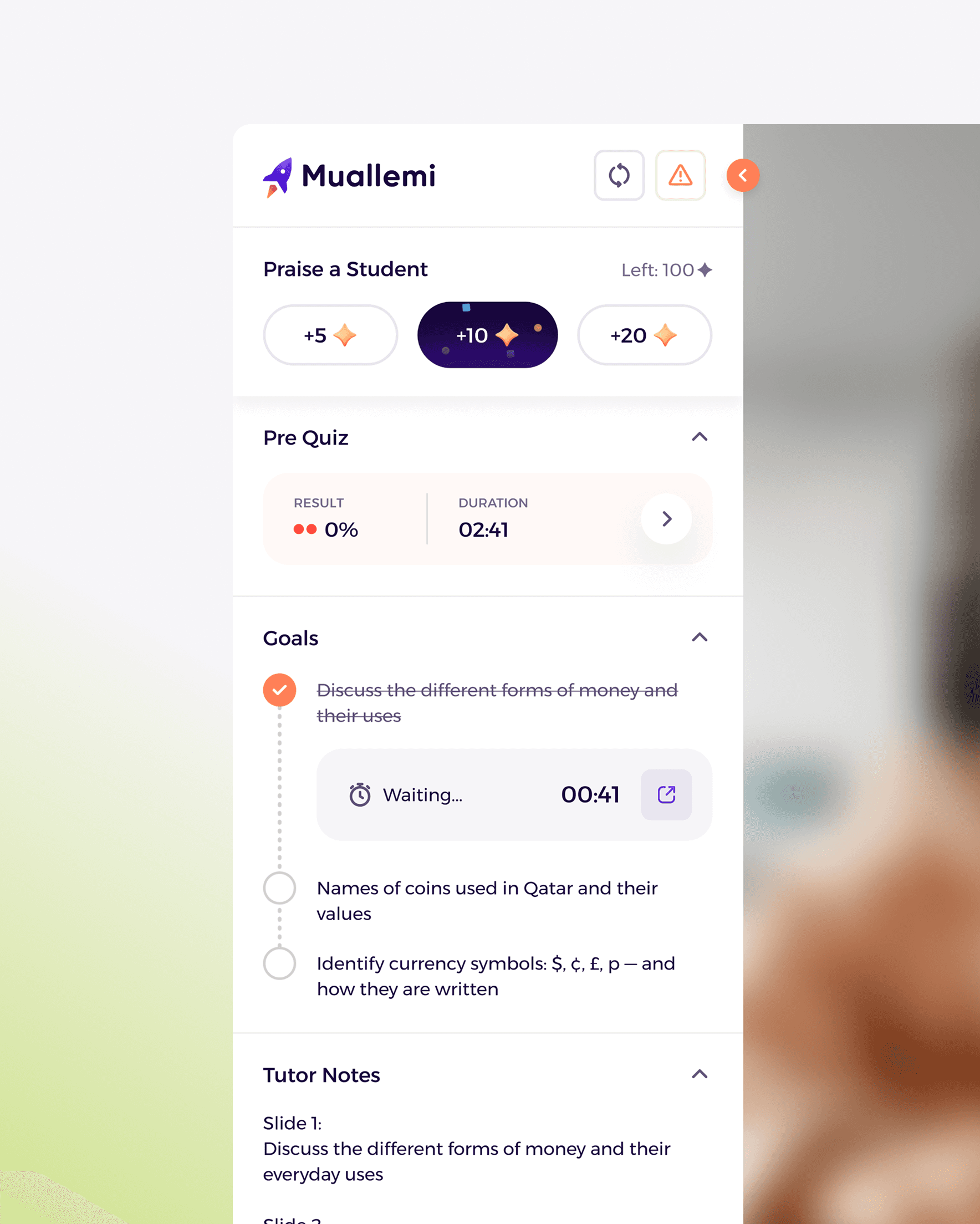
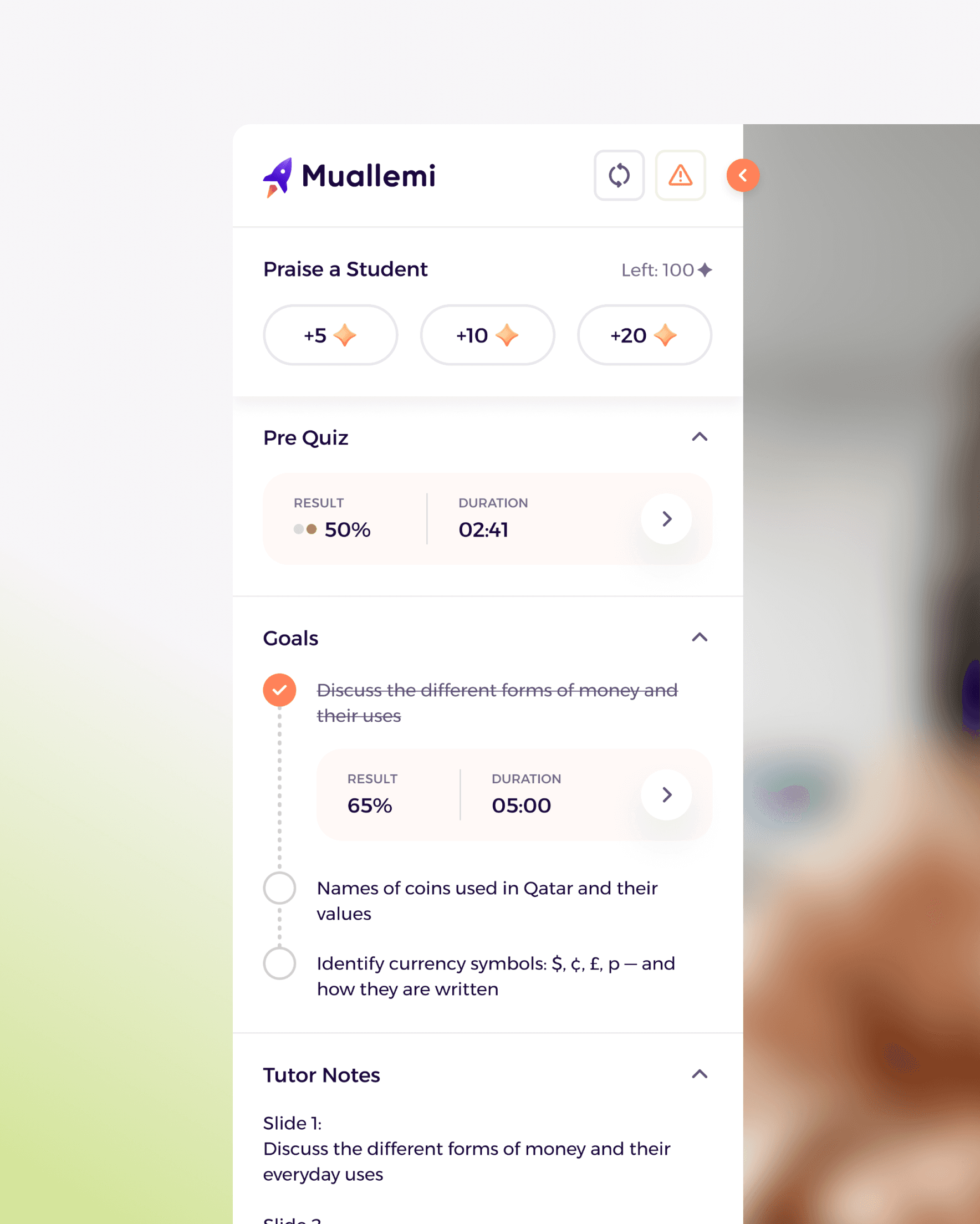
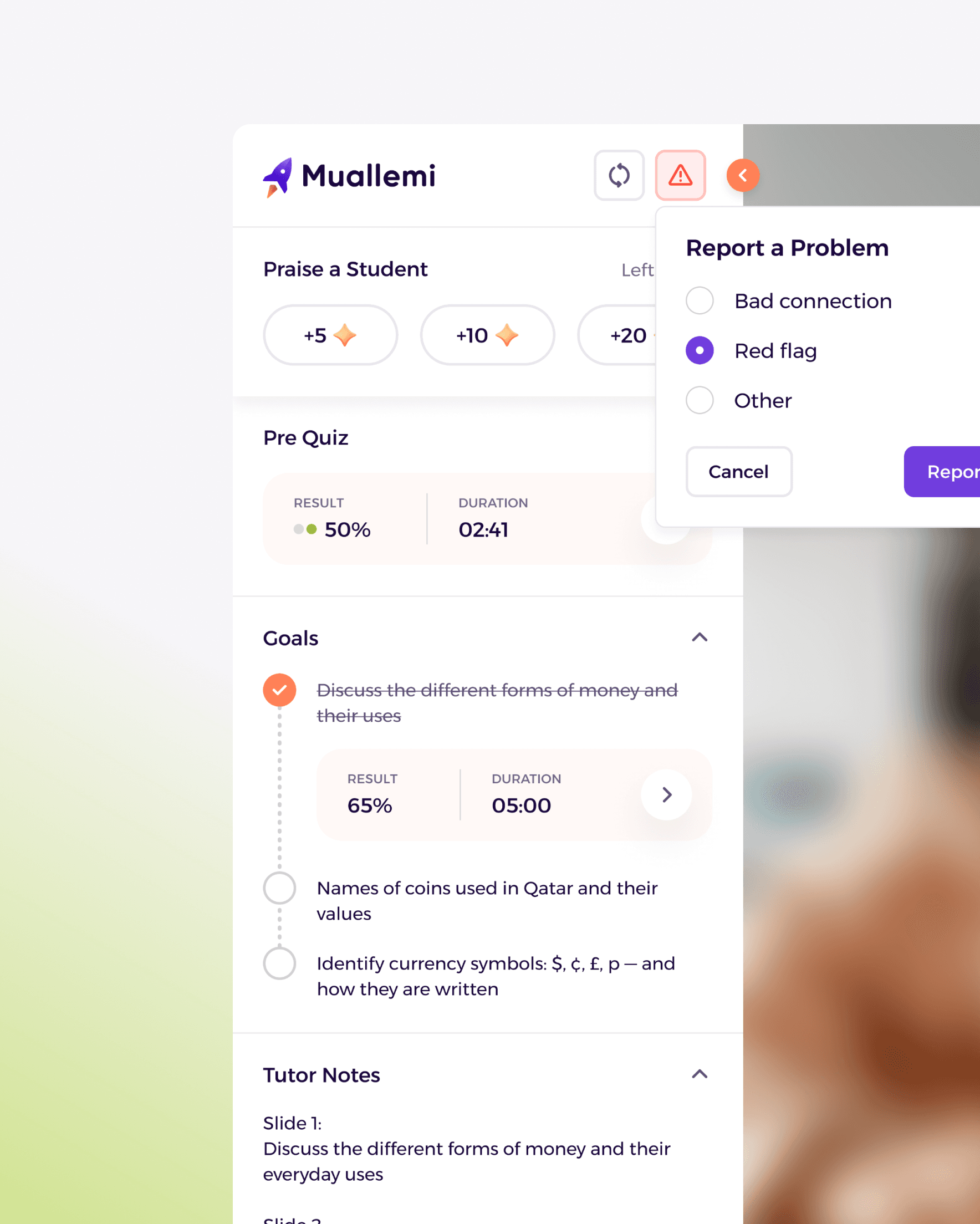
The live session interface was the most complex design problem in the product. While running a video call, a tutor needs to launch a pre-quiz and view its results, follow a structured lesson plan, mark goals as complete, provide post-goal assessments, award Effort Points to the student, and report technical or behavioural issues — all without leaving the session view.
The left panel consolidates all of this into a single, scannable surface. The sequence is deliberate: pre-quiz first, then lesson goals, then assessment, then reward. Each step is visible but not competing for attention until it's needed.

Subject design
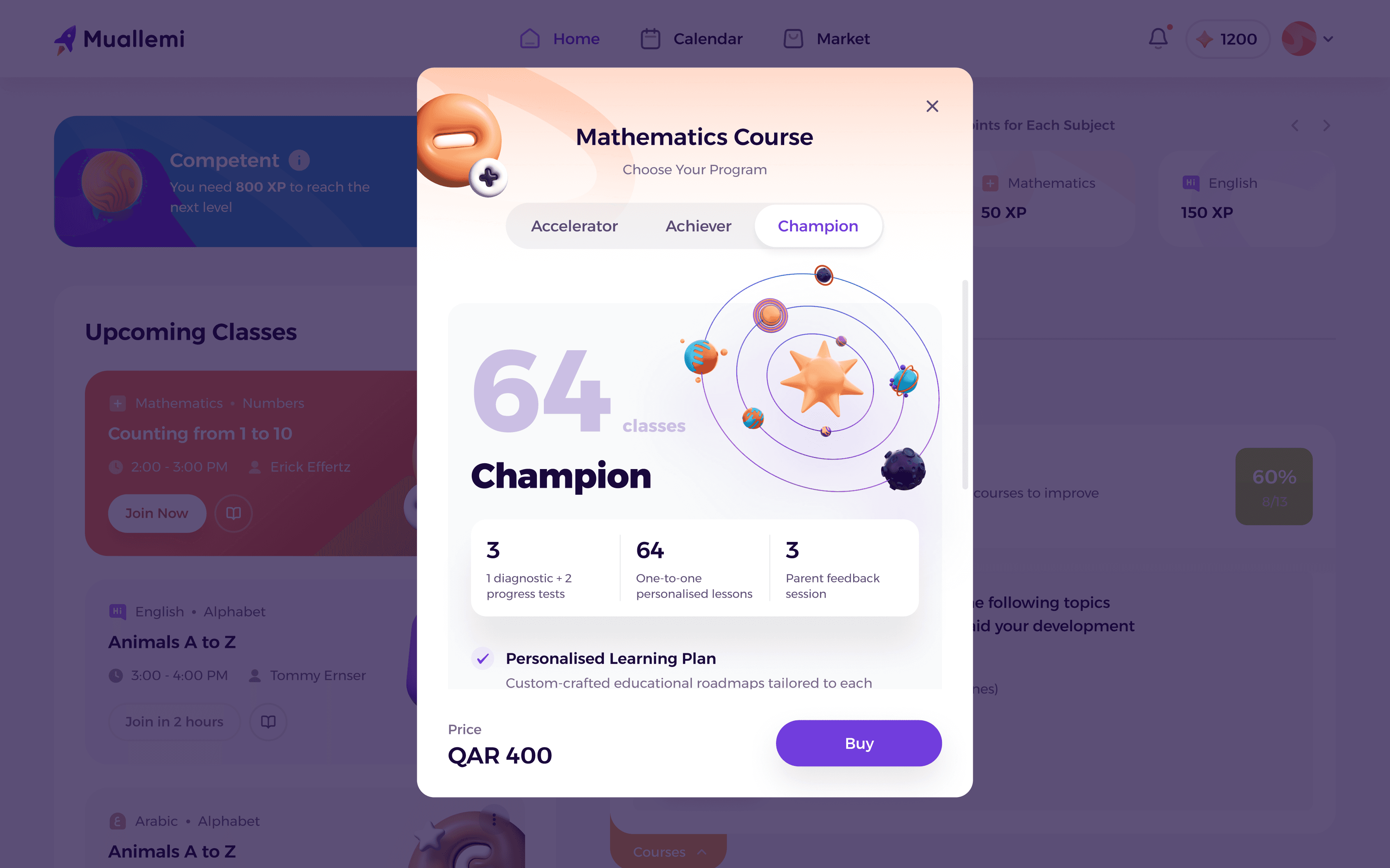
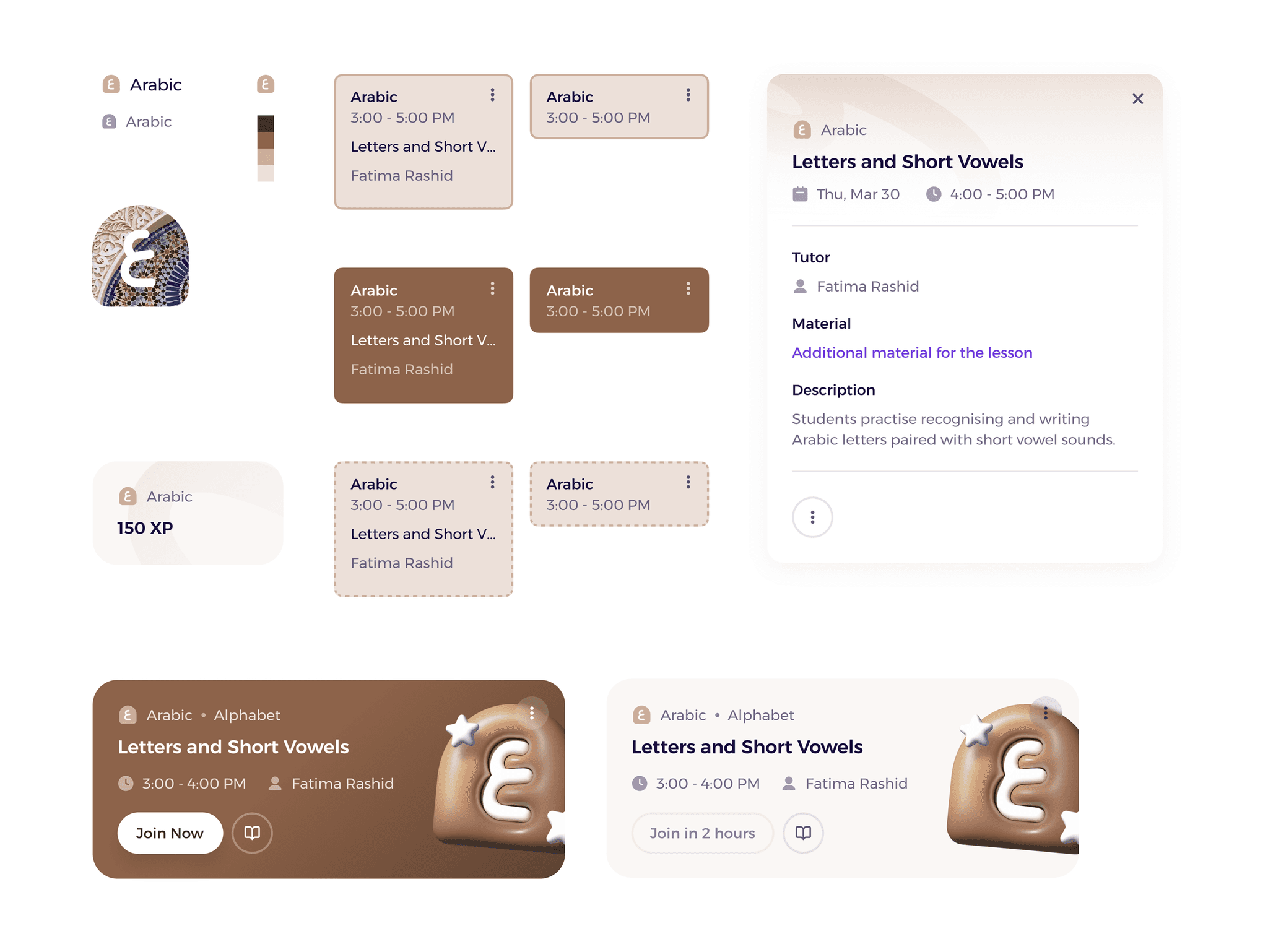
Muallemi covers a broad range of subjects — and each needed its own visual identity. I designed the illustration system and iconography across the full subject catalogue: math, science, Arabic, English, and others.
The visual language was built for a young audience. Each subject identity had to be immediately recognizable — a learning motivator, not just a label.
Gamification
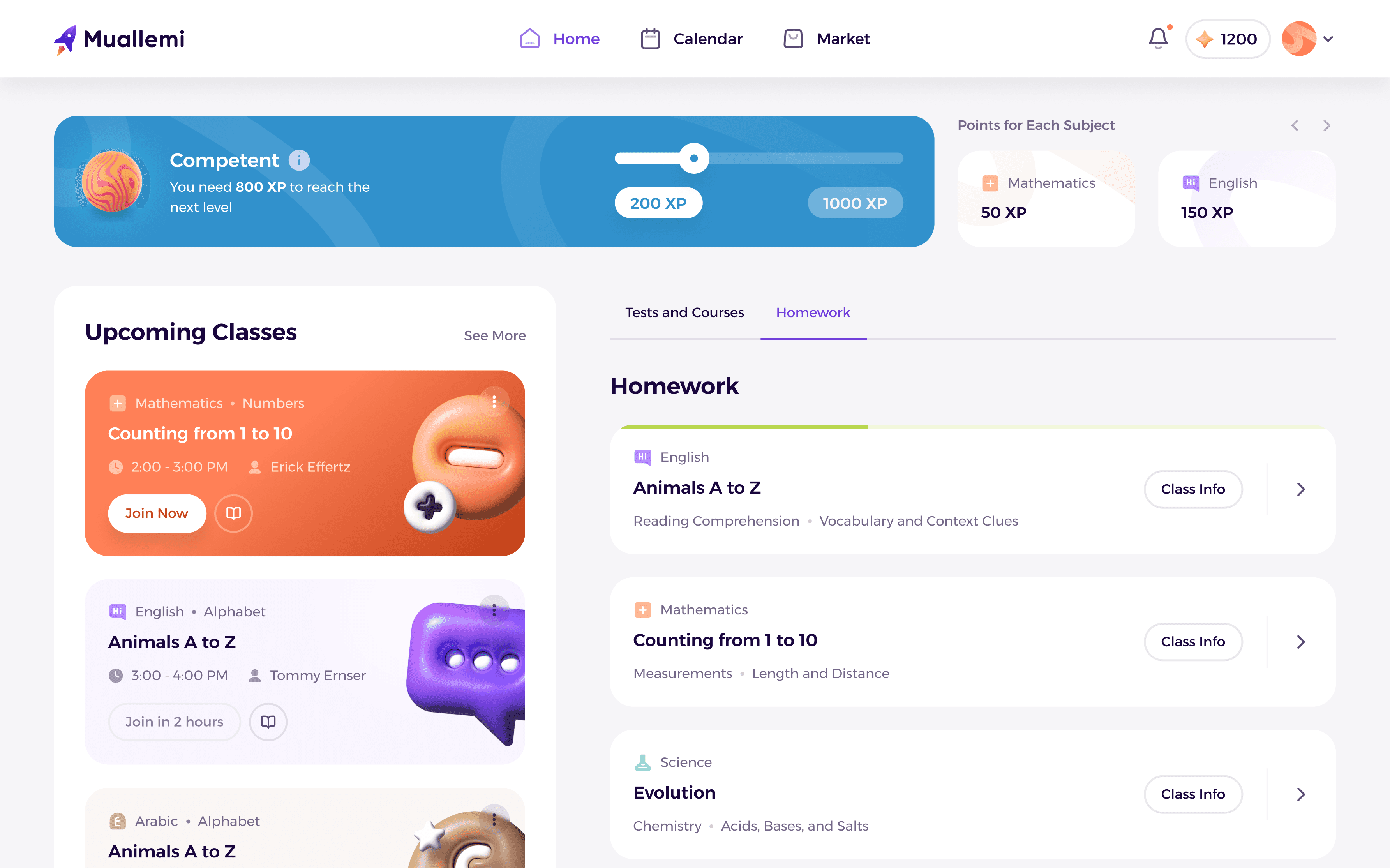
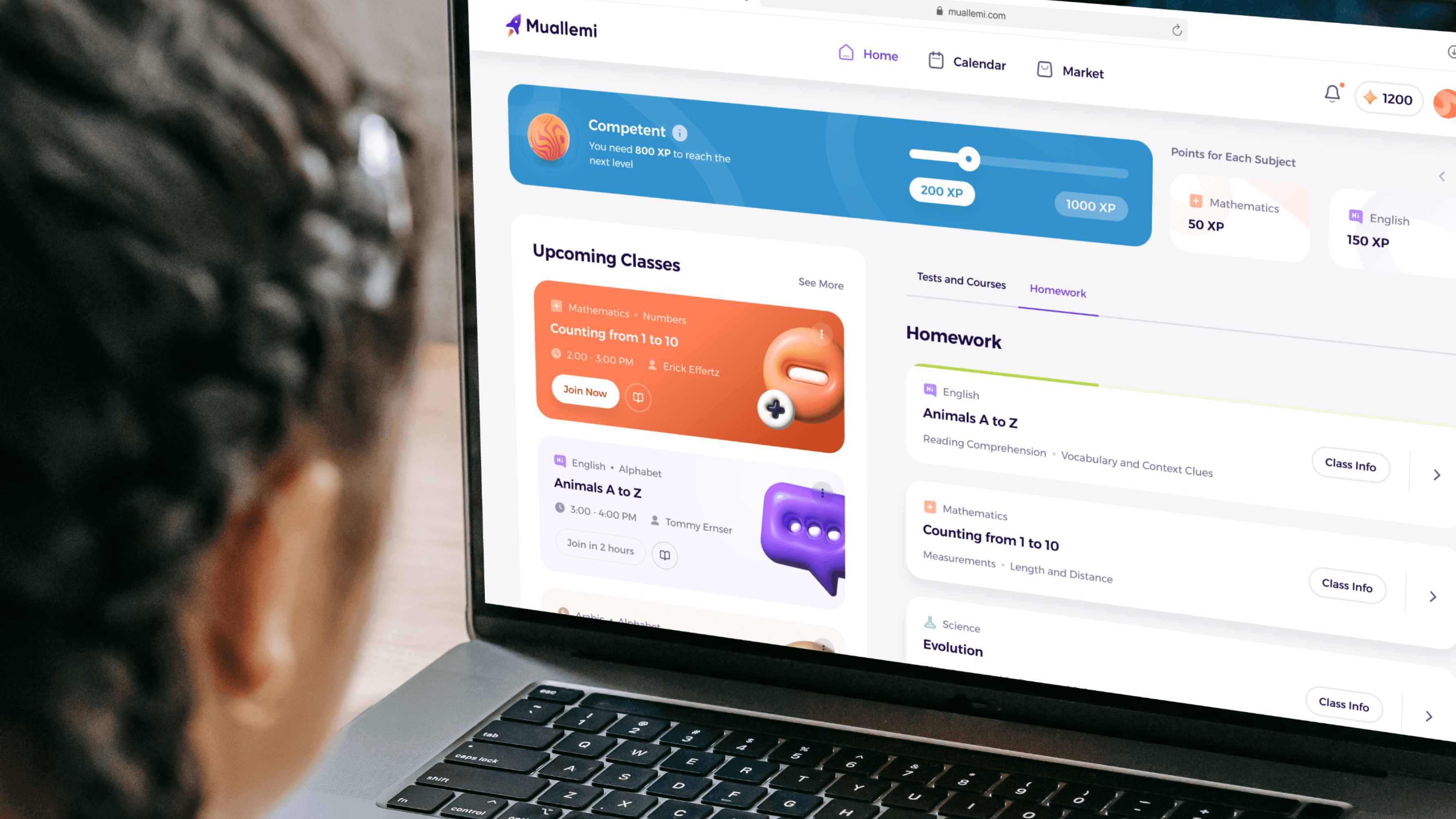
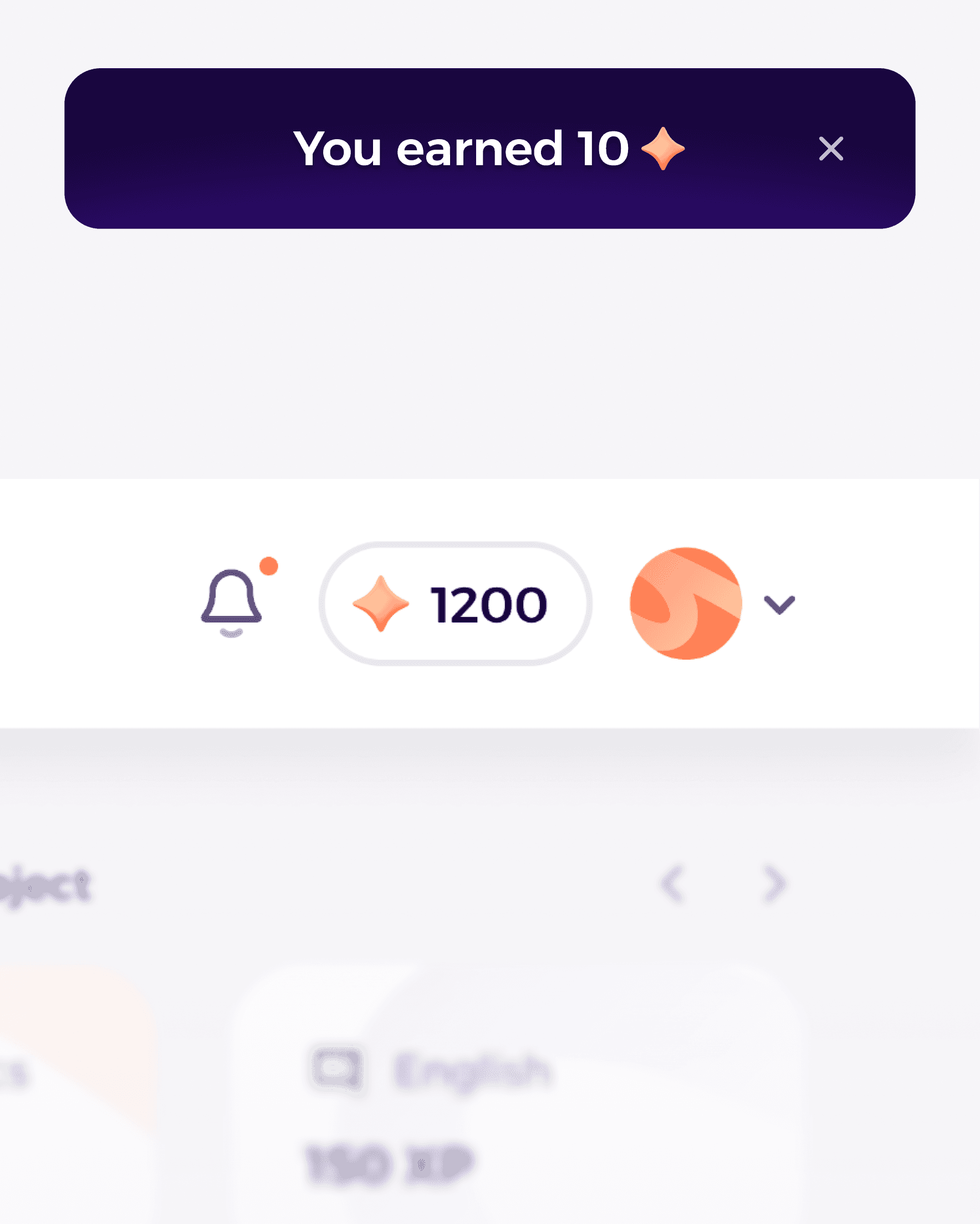
Keeping students engaged between sessions is one of the hardest problems in EdTech. Muallemi addresses it through Effort Points — a reward system built into the platform.
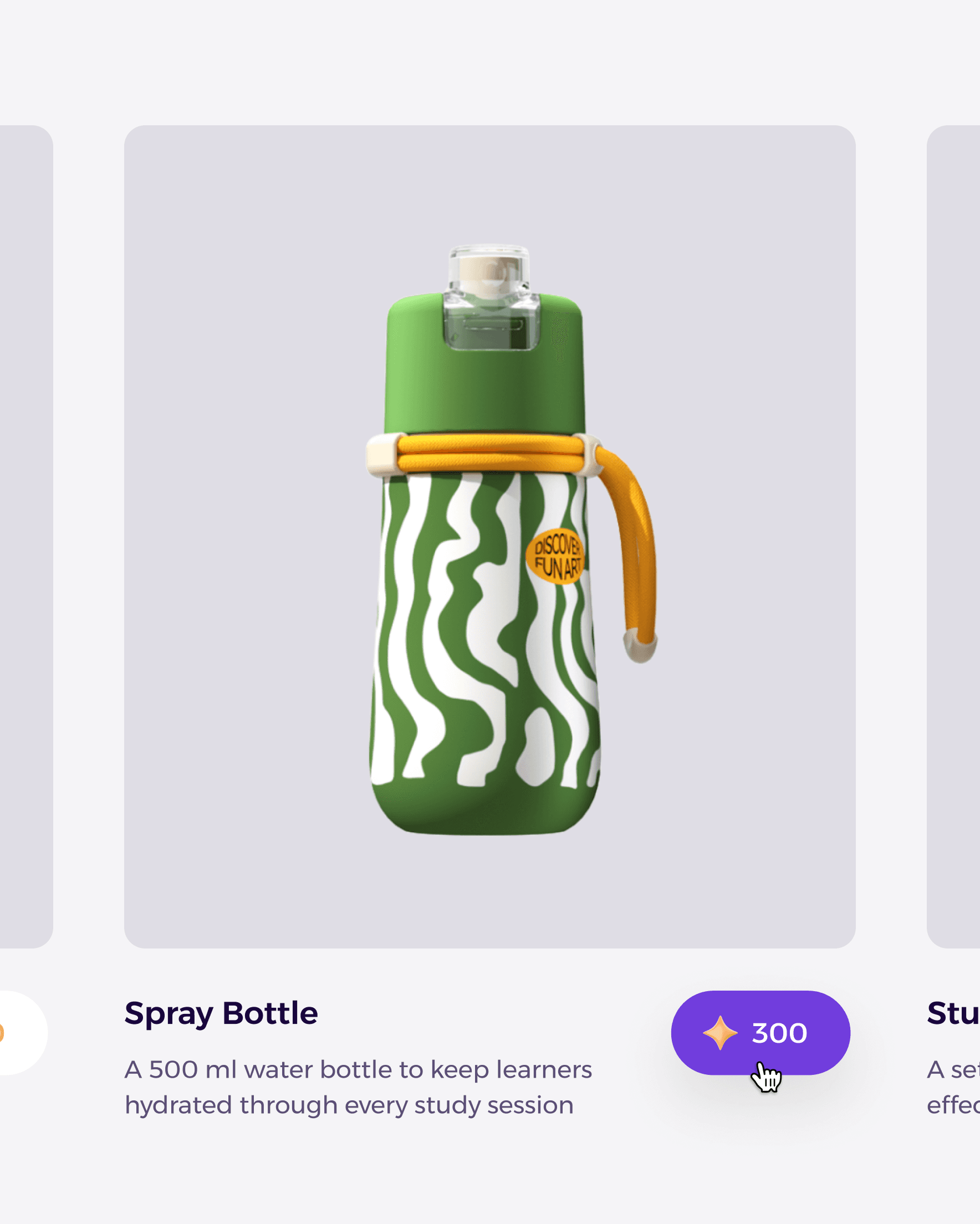
Students earn points for completing homework, leaving session reviews, and for effort recognized by their tutor during class. Points are spent in an in-platform marketplace — giving students something concrete to work toward. The system was designed to reward the behaviours students would otherwise skip: a post-session review earns points the same way a completed assignment does.
Calendar & scheduling
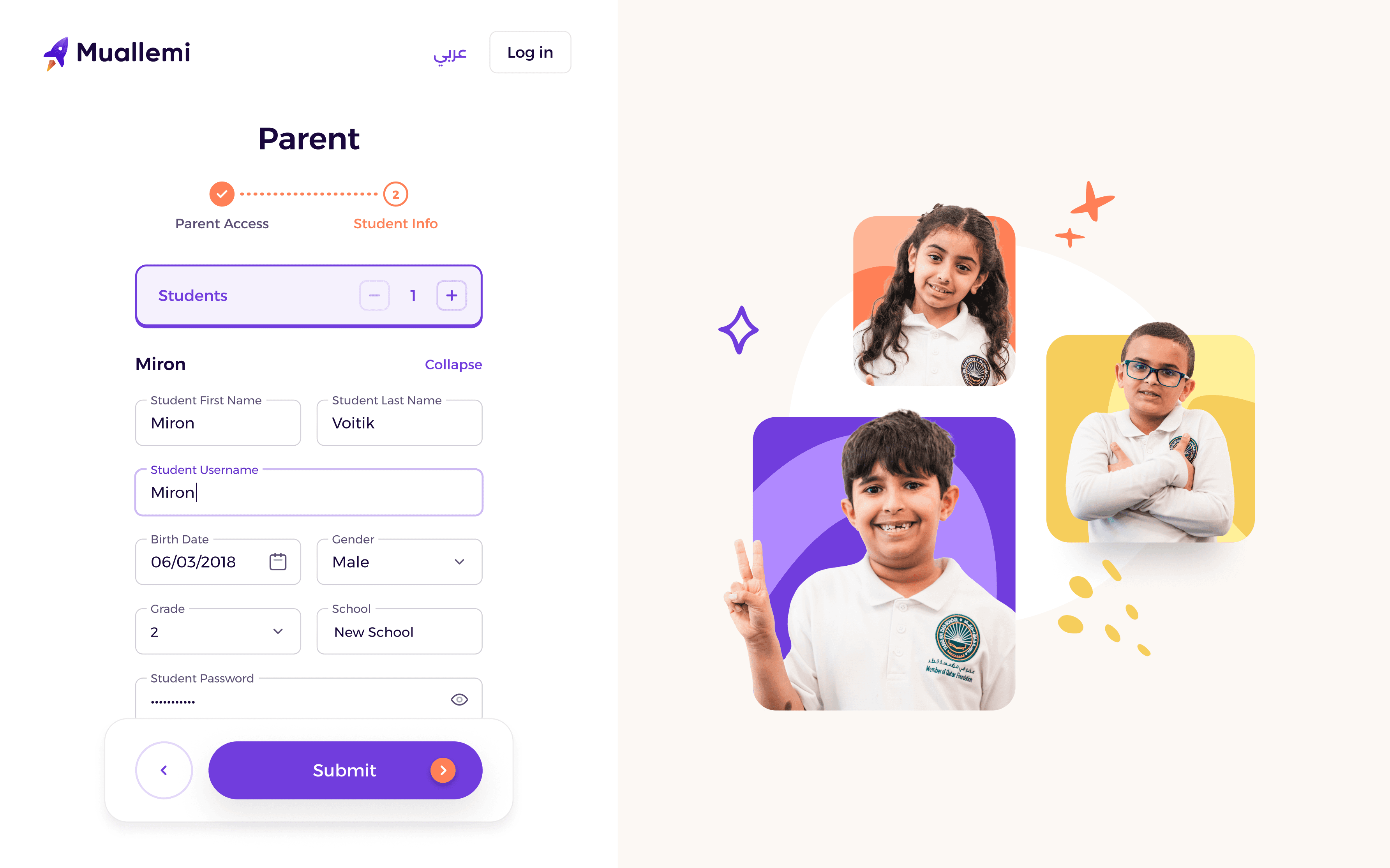
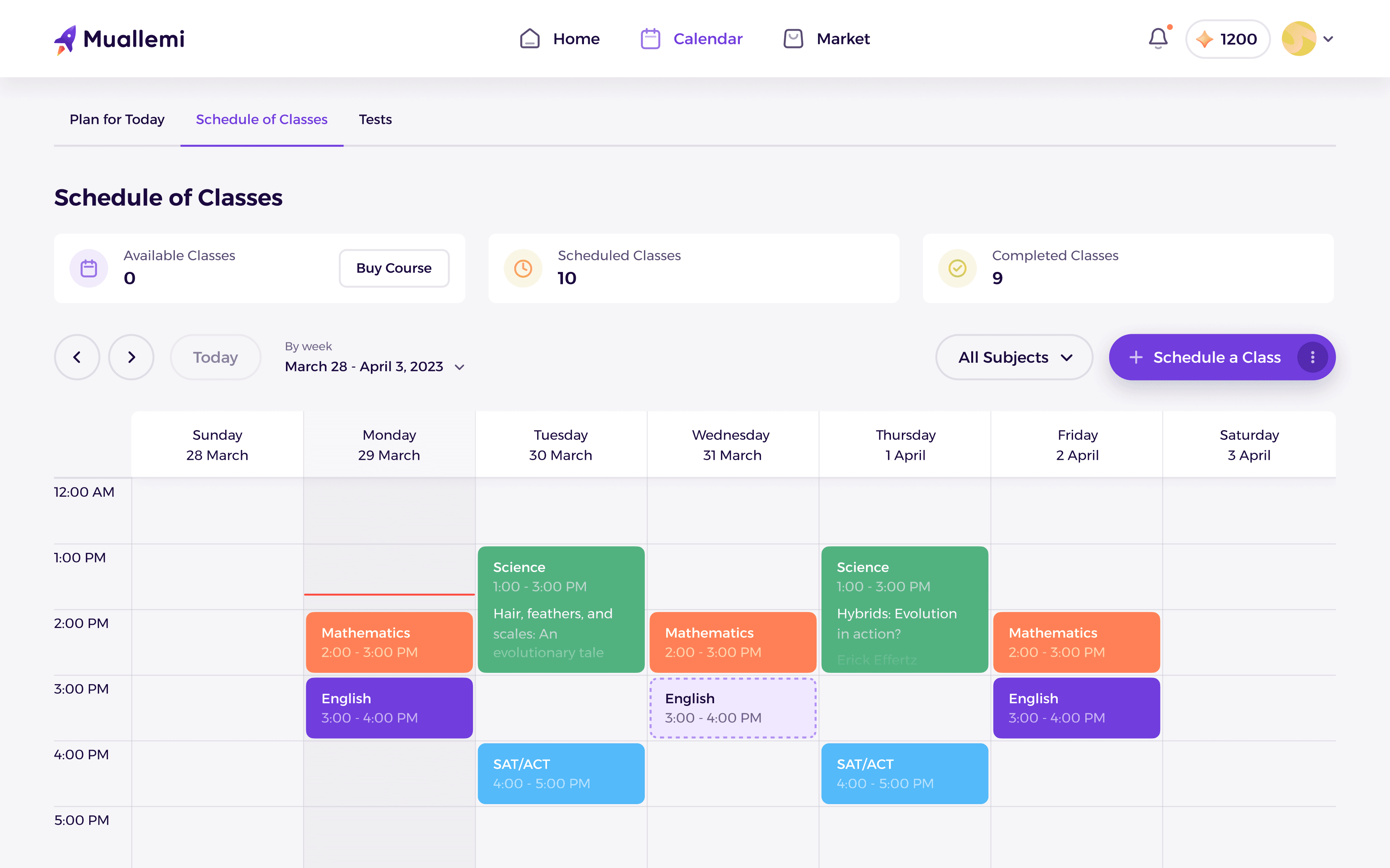
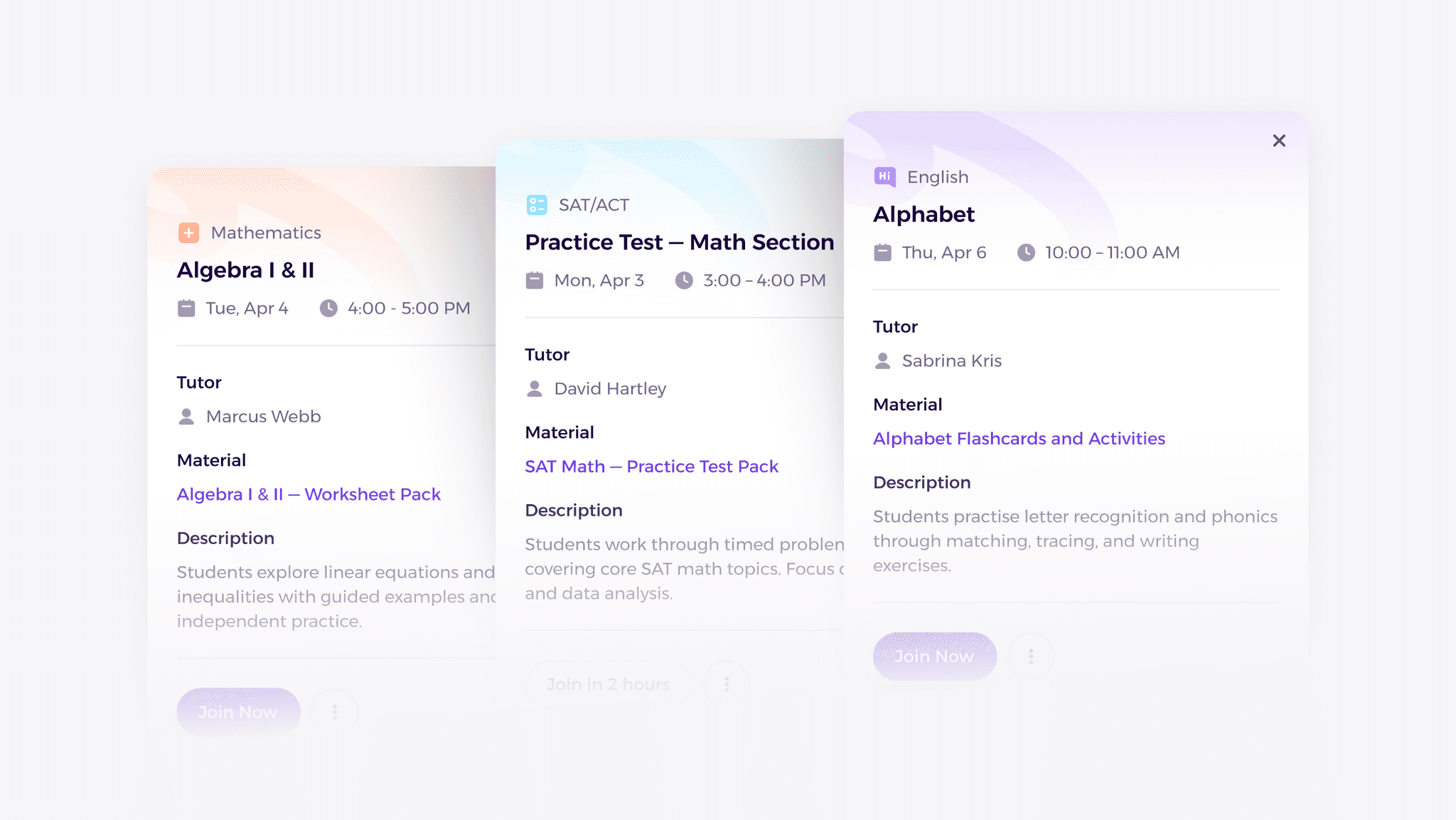
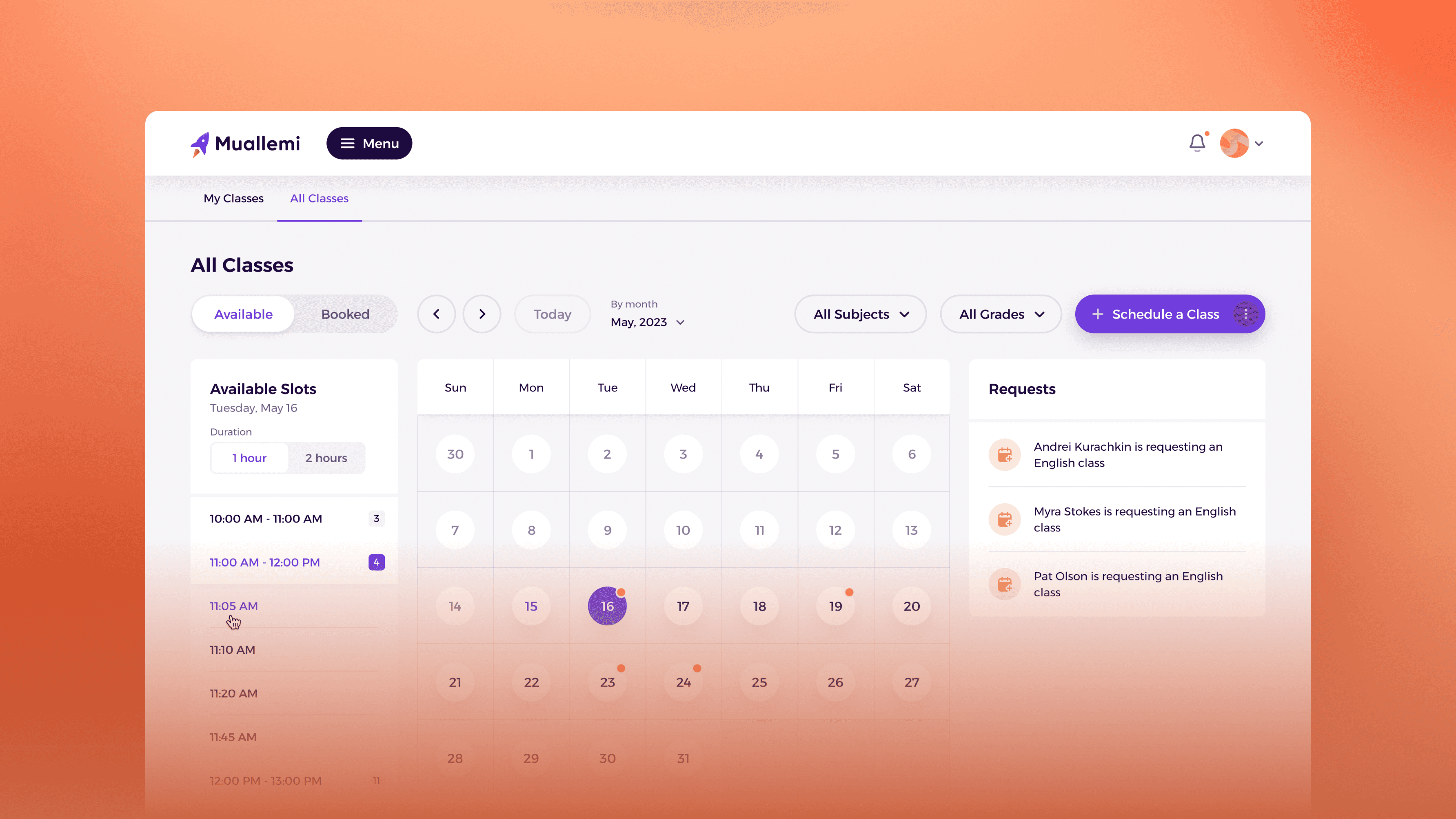
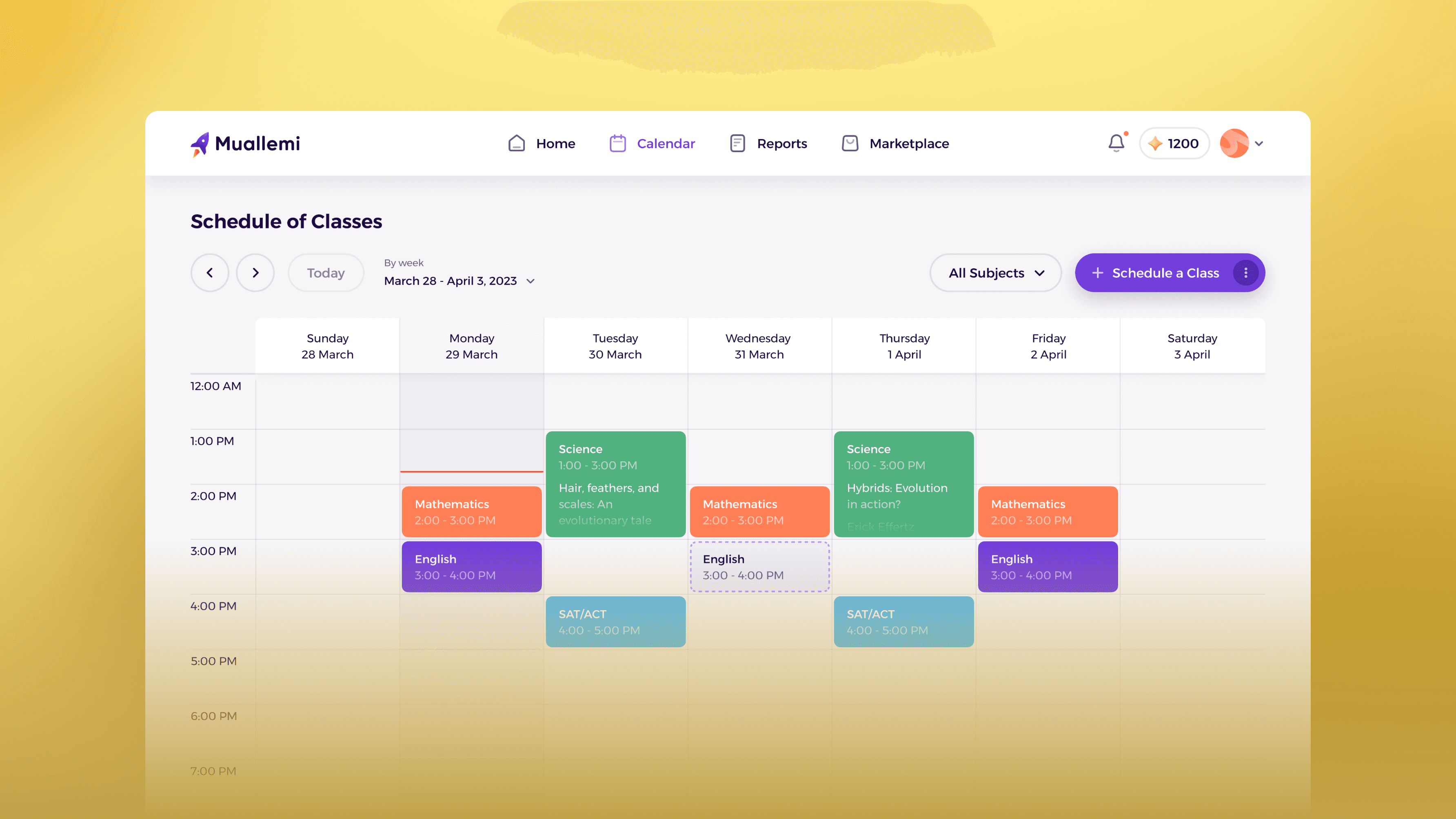
Scheduling works differently depending on who you are. Tutors see their full lesson load, manage assignments, and handle cancellations or tutor changes. Students and parents see upcoming sessions with access to session materials before the lesson starts. Schools and administrators manage scheduling across multiple students and classes simultaneously.
Outcome
The platform launched with real results: a 12% average improvement in student scores, and 93% of sessions rated 5 out of 5. Students logged over 2,000 hours on the platform across 150+ users, with school partners including Qatar Academy Sidra and Brighton International Academy.
What I'd do differently: the five-role structure was right, but I'd invest more time upfront mapping where roles interact — particularly tutor and student during live sessions. Some edge cases in the session flow surfaced late. Earlier cross-role journey mapping would have caught them sooner.